Wasp-76b

An artist’s impression of iron rain on the planet Wasp-76b, 640 light years away
An artist rendition of iron rain on Wasp-76b via The Guardian

Two weeks ago, scientists observed an iron rain type phenomenon on an exoplanet known as Wasp-76b. Wasp-76b is a gas giant that is located approximately 640 light years away from the constellation Pisces. Wasp-76b orbits a different sun in its own galaxy. The distance between Wasp-76b and the sun it orbits is about 3% of the distance between Earth and our Sun. This leads to surface temperatures of over 2,400 degrees Celsius. 

Recently, scientists detected winds on the planet measuring up to 10,000 miles per hour and a steady iron rain pelting the planet. The picture above is an artist’s rendition of what the phenomenon would look like. Observers have been able to locate over 4,000 exoplanets in recent years and it will be very interesting to see what more new discoveries lie ahead.

Juno and Jupiter

Jupiter
An image of Jupiter’s southern equatorial region taken by Juno via NASA

For my post this week, I decided to learn more about the Jovian planets, specifically Jupiter. Through my research, I discovered that Jupiter had a spacecraft sent by NASA to observe Jupiter named Juno. 

Juno was launched in 2011 and reached Jupiter by 2016. It is a rotating, solar-powered spacecraft. Because of the images and measurements Juno has been able to take, scientists have been able to learn a lot about Jupiter and its atmosphere. In December 2019, scientists were able to observe a new cyclone forming new Jupiter’s south pole. NASA estimated that this new cyclone was about the size of the state of Texas. Also, as recently as March 3rd, Juno was able to observe two storms merging on Jupiter’s surface which created a spectacular image

It will be interesting to see what new discoveries Juno has in store for NASA as our understanding of Jupiter and the Jovian planets continues to grow.

SOHO, the Sun-Watching Satellite

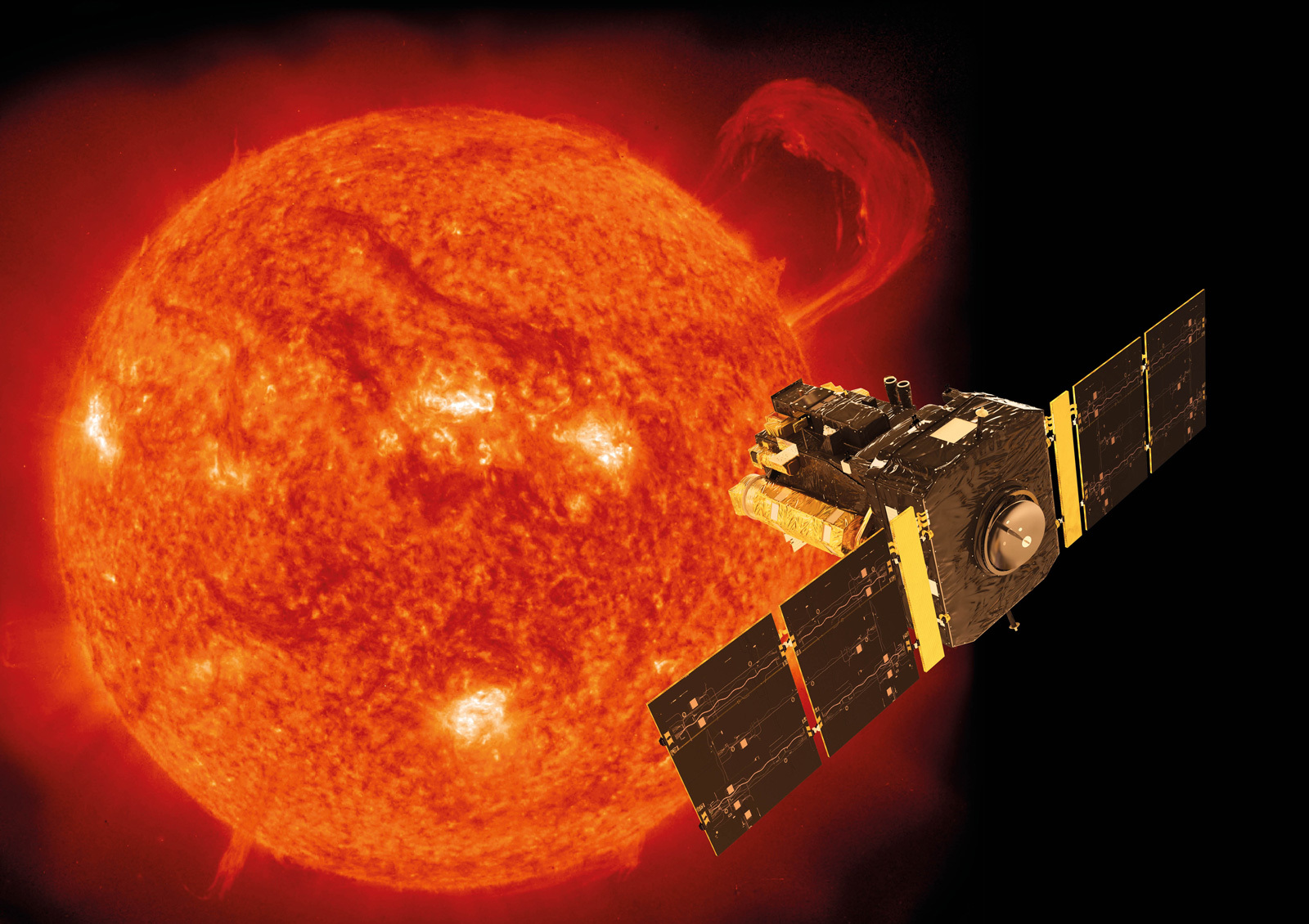
Spacecraft in space.
An artist’s depiction of the SOHO spacecraft via NASA

For my post this week, I decided to explore and learn about a spacecraft that I was not familiar with. After some research, I came across SOHO. SOHO is the longest-lived Sun-watching satellite to date. SOHO over its lifetime has been able to observe two full 11-year solar cycles and discover thousands of comets close to the Sun. 

SOHO is the result of a joint effort between NASA and the European Space Agency (ESA). The satellite was launched on December 2nd, 1995 from Cape Canaveral, Florida and contains 12 different scientific instruments. In December of 2020, SOHO will have reached 25 years of continuous exploration and observation of the Sun. 

SOHO has fundamentally changed ideas about what the Sun is over the course of its lifetime. According to Bernard Fleck, the ESA project scientist for SOHO, the satellite has changed our conceptions of the Sun from “a picture of a static, unchanging object in the sky to the dynamic beast it is.” Without SOHO, our knowledge of the Sun would not be where it is today.

Nashville’s “Snow Moon”

Image result for supermoon
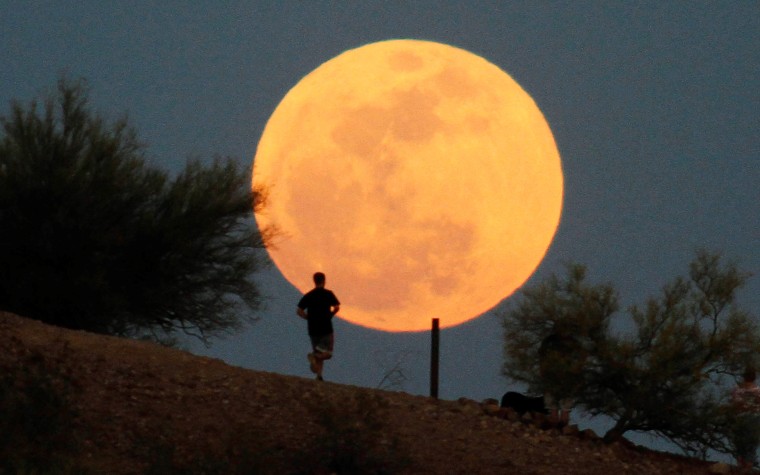
Photo of a 2012 “Supermoon” via NBC News

On the evening of Saturday February 9th, the Nashville area saw an abnormally large moon known as a super-moon. This was also a special moon because it was also known as the “snow moon.” The “snow moon” is a full or new moon of astronomical and cultural significance around the globe.

The super-moon phenomenon occurs when a new or full moon coincides with perigee which is when the Moon is closest to Earth in its elliptical orbit. This results in a Moon that appears larger than a normal new or full moon. Also, the tides associated with a super-moon are slightly more extreme due to the gravitational force between the Earth and the Moon being stronger because of a shorter distance between the two planetary bodies.

This moon was called the “snow moon” because according to the Farmers’ Almanac northeastern Native American tribes associated the moon with the large snowfall of early February. The “snow moon” is also significant in the Chinese, Jewish, and Buddhist cultures signaling the beginning and end of various holidays.

Star Atlas

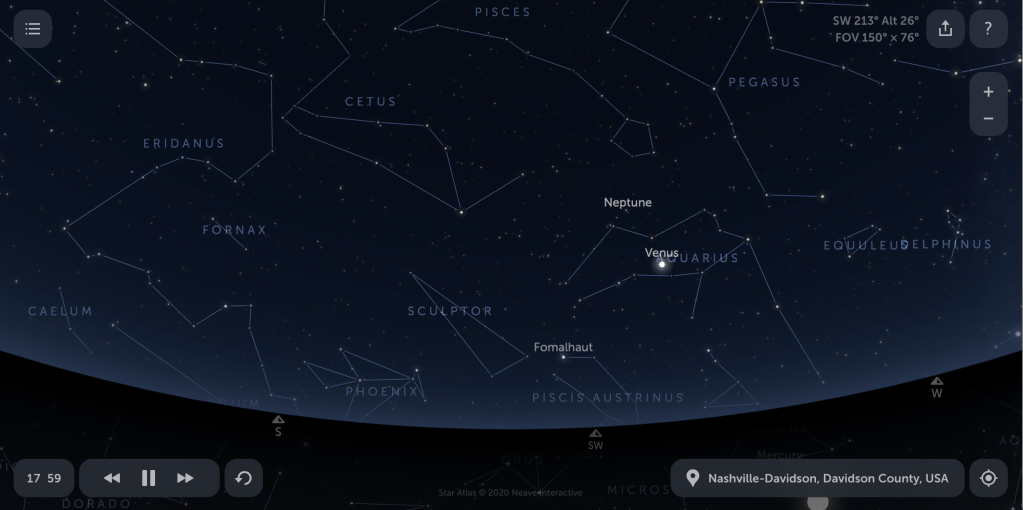
A view of the sky above Nashville via Star Atlas

This picture is a screenshot of the night sky view on January 19th, 2020 over Nashville through the lens of Star Atlas. Star Atlas is a website that allows anyone across the world to see the names and locations of various stars and planets they might see in the sky. In addition to a night mode, the site also features a day time view of the sky. I decided to use Star Atlas to see if I could identify any stars in the sky this evening since it was such a clear day. I was easily able to identify a few of the marked stars and Venus. The site also allows you to click on a particular star, planet, or other object and see the estimated distance and magnitude. I found it very interesting to look into these numbers as it helped me create a three-dimensional view of the solar system. I would recommend checking it out if you have some free time on a clear night.

Blog 0

Image result for miami skyline
The Miami Project (https://www.themiamiproject.org/nascic-2017/featured-image-miami-skyline/)

This is a picture of the Miami skyline. Miami is my hometown and I figured for my first post I would give the reader some background on myself. Miami is a unique city with a rich cultural history. To learn more about the history of Miami, I would encourage you to read Encyclopedia Brittanica‘s account of Miami’s history.

Design a site like this with WordPress.com
Get started